

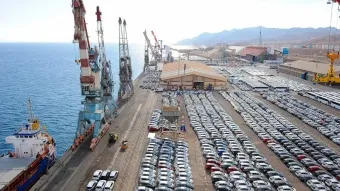
The Finance Committee, led by MK Hanoch Milvitsky, held a fifth follow-up discussion today on the ongoing crisis at the Port of Eilat, which has been inactive for about two years due to security concerns and threats in the Red Sea. During the meeting, a deep rift was revealed between the elected and professional ranks in government offices, with the committee chairman clarifying that approval of the upcoming state budget will be contingent on finding a concrete solution and implementing it for the port.
At the center of the dispute is a 21 million shekel aid plan previously formulated between the state, the port administration, and importers. Despite previous agreements, government office representatives stated in the discussion that they do not intend to implement the plan, partly due to the decision not to extend the work contract with the port. The Ministry of Economy continues to refuse to impose an 'import order' - a tool that would have allowed the redirection of ships and car shipments to the Port of Eilat on a voluntary basis - despite the Treasury and Transportation Ministries stating that they do not oppose such a move in principle.
The regulatory deadlock has broad implications for the Israeli supply chain. The shutdown of the southern port has led to a massive rerouting of car imports to the northern and central ports, creating operational congestion in other terminals and affecting overall unloading efficiency. In addition, the crisis directly threatens the livelihoods of about 130 port workers, most of whom have already exhausted their unemployment or disability benefits, with no clear employment prospects.
Professionally, the committee's demand for an 'immediate import order' for a period of three months is seen as an attempt for 'urgent operational treatment'. Such an order could require importers to use the port infrastructure in Eilat despite logistical challenges, in order to preserve the strategic asset and ensure the port's operational continuity in the post-war period. However, the Ministry of Economy fears the broad implications of such intervention in the free market.
The committee chairman concluded the discussion with sharp criticism of the Treasury's Budget Department, which he claims reneged on its commitment to provide a budgetary source of aid. 'This behavior does not pass in the Finance Committee,' Milvitsky summed up, emphasizing that committee members from all political spectrums are united in their demand to see actions on the ground before advancing budget discussions.
Ultimatum in Knesset: 'Solution for Eilat Port Will Be a Condition for State Budget Approval'
The ongoing crisis at the Port of Eilat, inactive for two years due to security threats, has led to a rift in government ranks. The Finance Committee has stated that the upcoming state budget approval will depend on a concrete solution for the port.
14:04 ,20.01.2026
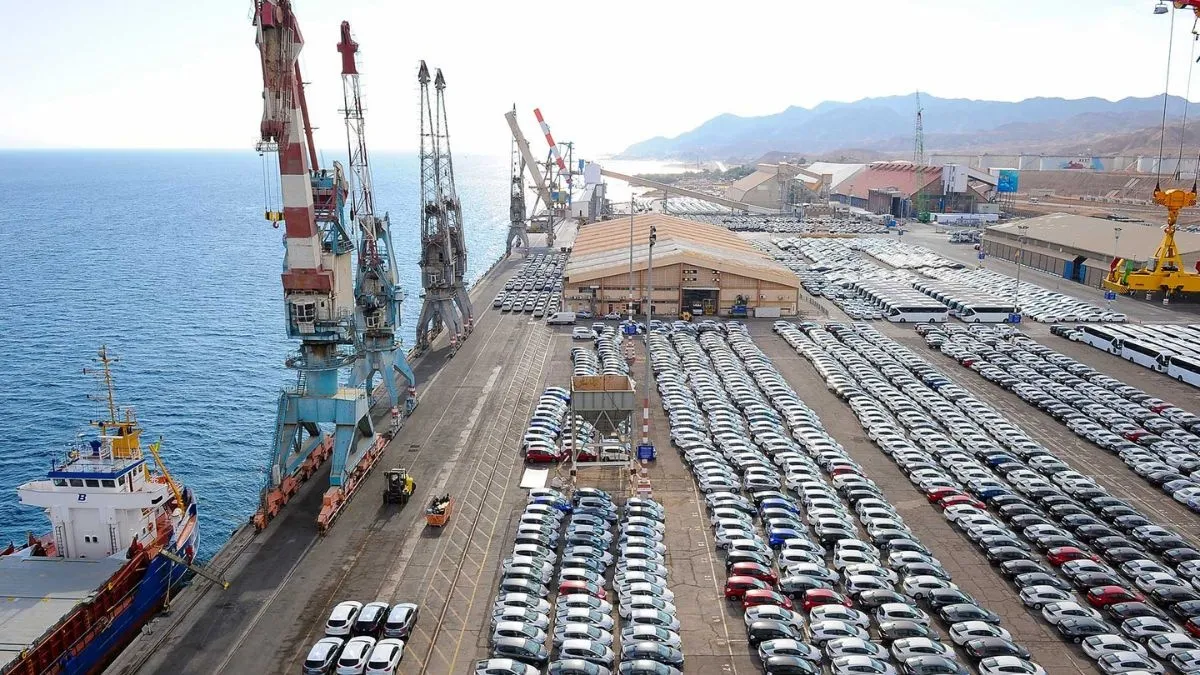
Ultimatum in Knesset: 'Solution for Eilat Port Will Be a Condition for State Budget Approval'
-
 Found it useful? Share
-
 Share on Facebook
-
 Share on X
-
 Share on LinkedIn
-
 Share via Email
-
 Share on WhatsApp
-
 Print Article
Found it useful? Share
Related
 12.01.2026
Eilat Port Rescue Plan Stalls, Sparks Criticism from Finance Committee
 08.01.2026
Ashdod Port Invests 220 Million Shekels in 12 New Cranes
 05.01.2026
Ashdod Port Welcomes US Delegation for Strategic Collaboration
 01.01.2026
Eilat Port: Upcoming Meeting to Discuss License Extension Terms
 31.12.2025
Eilat Port Challenges Government's Container Demand as Unrealistic
 28.12.2025
Haifa Port Updates Online Calculators with 2026 Port Tariffs