 Found it useful? Share
 Share on Facebook
 Share on X
 Share on LinkedIn
 Share via Email
 Share on WhatsApp
 Print Article
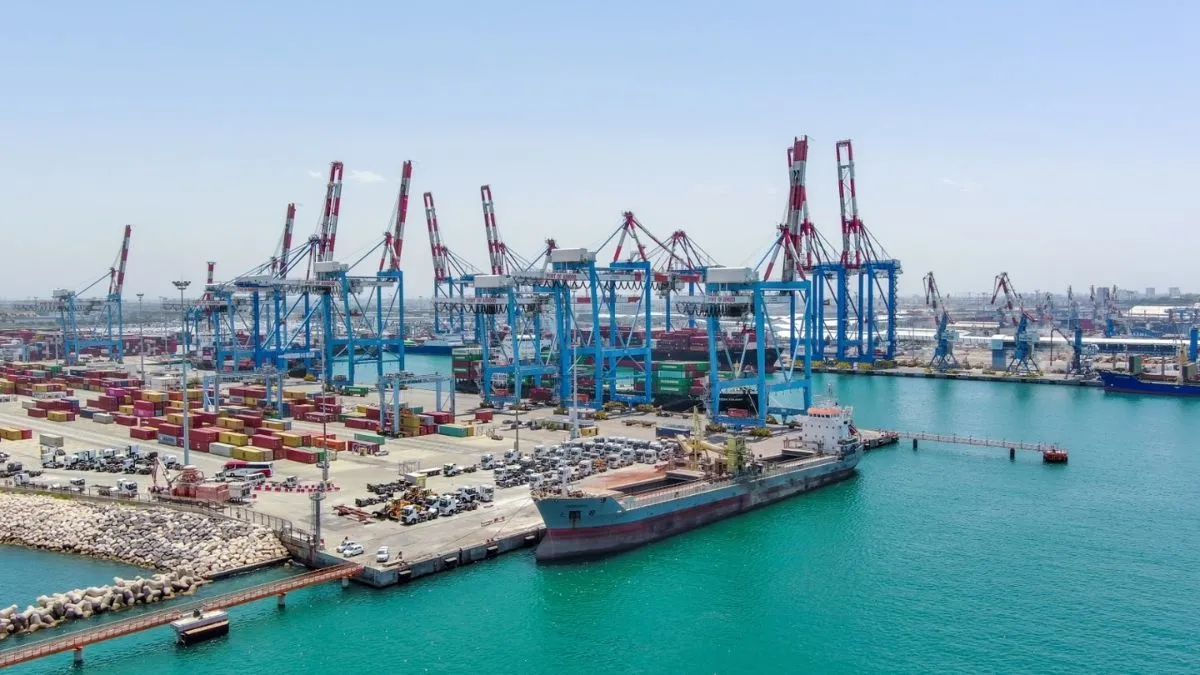
Ashdod Port Company publishes its financial results for the first quarter of 2026. Following record results in 2025, the company continues its growth trend, reporting an approximately 10% increase in revenue turnover, which broke another record and totaled 331 million NIS, compared to 302 million NIS in the corresponding quarter last year.
Net profit in the first quarter stood at 12 million NIS (compared to 20 million NIS last year) and EBITDA totaled 50 million NIS (compared to 61 million NIS last year). The company emphasizes that the decrease in profitability stems directly from a one-time provision for an employee bonus of 39 million NIS for 2025 profits and war grants; neutralizing this component, the port shows excellent operational results from ongoing business activity.
"Functional Continuity Amidst Operation 'Lion's Roar'"
The port's operating profit in the past quarter stood at 9 million NIS (compared to 25 million NIS in the corresponding quarter). This achievement was recorded while fully maintaining activity volumes, despite the security challenges posed by Operation "Lion's Roar."
The company's net financing income recorded a 100% jump, totaling 10 million NIS, compared to 5 million NIS in the first quarter of 2025. The port's equity as of March 31, 2026, stood at 2,714 million NIS, with the slight decrease attributed to the declaration of a dividend for 2025 recorded in this quarter.
"Segment Data: 66% Surge in Vehicle Imports"
The port's financial results are based on stability and growth in most port segments:
Vehicle segment: Sharp growth of approximately 66%, with about 30,000 vehicles unloaded at the port in the first quarter, compared to about 18,000 vehicles in the same period last year.
Container segment: Full stability in demand levels. The volume of containers loaded and unloaded at the port totaled 186,000 containers (identical to the corresponding period in 2025), representing a market share of 38.6%.
Bulk segment: Handling volume (excluding fuel at marine terminals) rose to 2,388 thousand tons, compared to 2,274 thousand tons last year, representing a market share of 50.7%.
General cargo: Decrease to 251 thousand tons (compared to 359 thousand tons last year), a decline characterizing the entire market due to a temporary slowdown in demand in the real estate and equipment sectors.
Passenger ships (Cruise): The security situation completely halted activity in this segment, and the port is preparing its logistics infrastructure for its resumption as the situation stabilizes.
"Investment in Infrastructure and Operational Equipment"
Shaul Schneider, Chairman of the Board of Ashdod Port: "Ashdod Port continues to present a high level of revenue and maintains positive profitability, even though the results were affected by Operation 'Lion's Roar.' Port employees stepped up as always and maintained full functional continuity. Thanks to this, we preserved cargo volumes, and the company continues its momentum in renewing operational equipment in anticipation of the opening stream of demand."
Nissan Levy, CEO of Ashdod Port Company: "The results testify to the port's robustness and resilience as a vital strategic facility. Alongside the war, the development momentum did not stop, and as part of the strategic plan, we completed the preparation of the pier hinterland and finished the rapid preparation of the hinterland of Pier 25. Neutralizing employee grants, the results from business activity were excellent."
The results also received praise from the government level. The Israeli Minister of Transport, Miri Regev, and the Minister in charge of the Government Companies Authority, David Amsalem, congratulated the port management and employees on maintaining the Israeli economy's supply chain and continuing investments in infrastructure and innovation even during a complex security period.