Found it useful? Share
 Share on Facebook
 Share on X
 Share on LinkedIn
 Share via Email
 Share on WhatsApp
 Print Article
2025 will be remembered as the year the Israeli supply chain demonstrated extraordinary resilience while undergoing a profound transformation. According to data from the Israeli Shipping and Ports Authority summarizing the past year, Israel's ports handled a record volume of 3.445 million TEU—an impressive jump of approximately 12.6% compared to 2024.
The Era of Private Ports
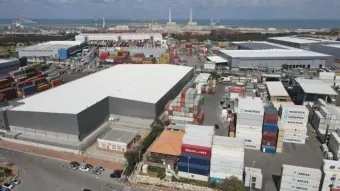
The most prominent figure in the report is the "surge" of private ports into market shares. Hadarom Container Terminal (HCT) solidified its position as a key player, handling 885,000 TEU (up from 693,000 last year), while Bay Port (SIPG) climbed to 636,000 TEU. Together, the two new ports already control nearly half of Israel's container traffic.
Among the veteran ports, Ashdod Port maintains first place with 1.248 million TEU, while Haifa Port recorded relative stability with 676,000 TEU. Conversely, the situation at Eilat Port is bleak due to security tensions in the Red Sea. The port concluded the year with a round zero in container throughput.
Vehicle Sector Shakeup: Haifa Leads, Eilat Out
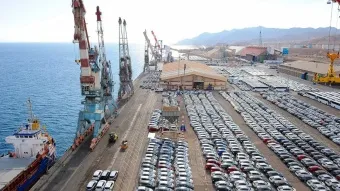
One of the year's major dramas is the approximately 11% decrease in vehicle imports to Israel. In 2025, 247,581 vehicles were discharged at the ports, compared to over 277,000 in the previous year. The geopolitical shift is clearly evident here, as Eilat Port, which previously served as the main gateway for vehicles from the East, remained completely empty. Its place was taken by Haifa Port, which became the industry leader with the discharge of 122,239 vehicles, followed by Ashdod Port with 102,931 vehicles.
General Cargo and Grains: Resilience in Basic Supply
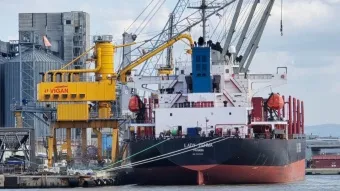
Despite the threats, Israel's food security was maintained. Grain discharging rose to 5.37 million tons, with the Haifa and Ashdod silos operating at high capacity. The general cargo sector (iron, wood, and bulk) also saw growth to 4.98 million tons, with Israel Shipyards recording a particularly strong year of activity with nearly 2 million tons of general cargo.
Ultimately, Israel's ports conclude a year of contrasts. On one hand, breaking operational records in the center and north, and on the other, almost total paralysis in the far south. Industry sources noted that the Israeli market has learned to rely on competition between the five ports, allowing the economy to continue functioning even under global logistical and security disruptions.