 Found it useful? Share
 Share on Facebook
 Share on X
 Share on LinkedIn
 Share via Email
 Share on WhatsApp
 Print Article
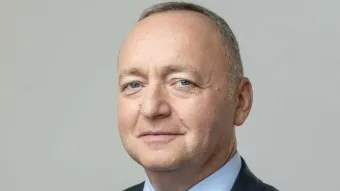
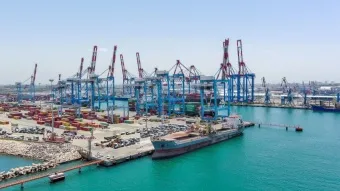
Shaul Schneider, Chairman of the Board of Ashdod Port Company, participated in a foreign trade conference held at the Tel Aviv Stock Exchange, presenting the port's strategic and financial plan for the next era. In his remarks, Schneider emphasized the importance of integrating Israel into global infrastructure projects, revealed the economic data behind the surge in the company's valuation, and presented investments of over half a billion shekels in infrastructure and technological innovation.
Schneider spoke extensively about the American mega-infrastructure initiative – the India-Middle East-Europe Economic Corridor (IMEC) – emphasizing that it is a critical necessity for national resilience: "The State of Israel must be part of strategic alliances; it cannot continue to be alone and connect only on a point-to-point basis. The world has become a world of alliances and collaborations in the fields of logistics, digitization, and subsea cables."
Strategic Agreements and Operational Resilience Under Fire
The Chairman reviewed the port's extraordinary functional continuity, which was maintained throughout the entire period of the conflict: "The defining moment for us was on October 8, 2023, at 8:00 AM, when I arrived at the piers and the workers were already there. We understood that this is our home, and we need to protect it and ensure the supply response for the economy. We made real-time decisions to create functional continuity under fire, from caring for reservists and supporting families evacuated from the border area to providing a rapid operational response for security-related vessels and the needs of the defense establishment."
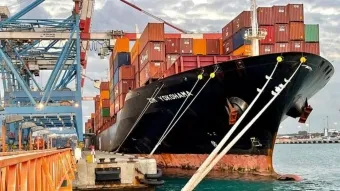
Schneider complimented the international shipping companies that maintained regular calling lines at the port: "Ashdod Port is part of a critical supply chain, and therefore we have agreements with global shipping companies that never stopped calling on us. Companies like Taiwan's Yang Ming, which feel a shared destiny, alongside shipping giant MSC and other companies, did not leave us for a moment. These alliances with ports and shipping companies are what allow the continuous arrival of goods and raw materials to the Israeli economy."
Doubling Company Value and Preparing for Debt Issuance
Regarding the macroeconomic structure and competition with private ports ("Bay Port" and "South Port"), Schneider presented solid financial data but demanded a "level playing field": "We are in favor of competition, but against burdensome regulation that does not allow us to compete fairly. Today, every move at the port is analyzed at an economic-financial level just like in a private company. The fact is that we have doubled the company's value in the last three years and completely erased the valuation decline that occurred on the eve of the opening of competition. We are now preparing for a debt issuance of hundreds of millions of shekels on the Tel Aviv Stock Exchange, to become a reporting company and lead the port to the next stage."
The Three-Year Plan: Infrastructure, AI, and Energy Redundancy
According to the Chairman, Ashdod Port is now focused on activity in three main areas:
Operational optimization: purchasing state-of-the-art ship-to-shore cranes, upgrading container and general cargo piers, and integrating AI-based systems for managing queues and storage areas.
Independent energy redundancy: establishing an internal energy production system with a capacity of 35 MW, allowing the port to operate independently and disconnected from the national grid in case of extreme scenarios or blackouts.
Strengthening competitiveness: improving service levels to retain and attract new shipping lines.
Finally, Schneider presented the port's transformation into a global maritime technological incubator: "We made a decision to be not just the largest port in Israel, but the smartest port in Israel. We established a technological innovation hub where about 148 startups have passed through. 44 companies have already successfully completed Proof of Concept (POC), and 14 of them have become our official suppliers in the fields of cyber, maritime safety, and drones. This allows us to invest in equity in these companies and push from the concept of a Startup Nation toward a Scale-up Nation in strategic cooperation with 28 leading ports around the world."