 Found it useful? Share
 Share on Facebook
 Share on X
 Share on LinkedIn
 Share via Email
 Share on WhatsApp
 Print Article
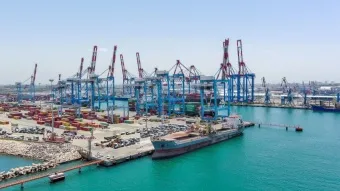
The Appointments Committee of the Government Companies Authority has approved the recommendation of the Israeli Minister of Transport and Road Safety, Miri Regev, and the Minister responsible for the Companies Authority, David Amsalem, to appoint Shaul Schneider for an additional term as Chairman of the Board of Directors of the Ashdod Port Company.
Schneider has served as the Chairman of the Ashdod Port Board for the past three years, having previously served as a board member. During his tenure, Schneider successfully navigated the port through one of the most complex and challenging periods in the Israeli economy, characterized by regional uncertainty, severe global supply chain disruptions, and intensifying competition from new private ports.
According to data, the valuation of the Ashdod Port Company has doubled over the past three years, despite the operational challenges of the wartime period. During his term, Schneider instilled a competitive business culture at the port, led innovation and technology initiatives, and promoted international collaborations in maritime cyber security and critical infrastructure protection. Alongside these achievements, stable labor relations were maintained with the unions, and improvements were recorded in customer service levels and the company's business results.
Shaul Schneider, Chairman of the Ashdod Port Board, stated: "I thank Transport Minister Miri Regev and Minister David Amsalem for their trust and commitment to the continued development of Ashdod Port as a strategic asset for the State of Israel. The war and geopolitical shifts demonstrate that seaports are national assets that must be strengthened and protected. Alongside the challenges, opportunities for regional cooperation are emerging, and Ashdod Port will continue to operate as a national, business-oriented, innovative, and competitive port."
The extension of Schneider's term signals critical management continuity at the country's largest government-owned port, particularly at a time when stability is required in the face of supply chain threats and transformations in the local port market.