 Found it useful? Share
 Share on Facebook
 Share on X
 Share on LinkedIn
 Share via Email
 Share on WhatsApp
 Print Article
A few months after receiving final regulatory approvals, South Korean aviation giant Korean Air is entering the decisive phase of its mega-merger with competitor Asiana Airlines.
The move, expected to conclude with full rebranding and integration by December 2026, will transform the group into one of the world's top 10 airlines and establish Incheon International Airport (ICN) as the most dominant hub in Northeast Asia.
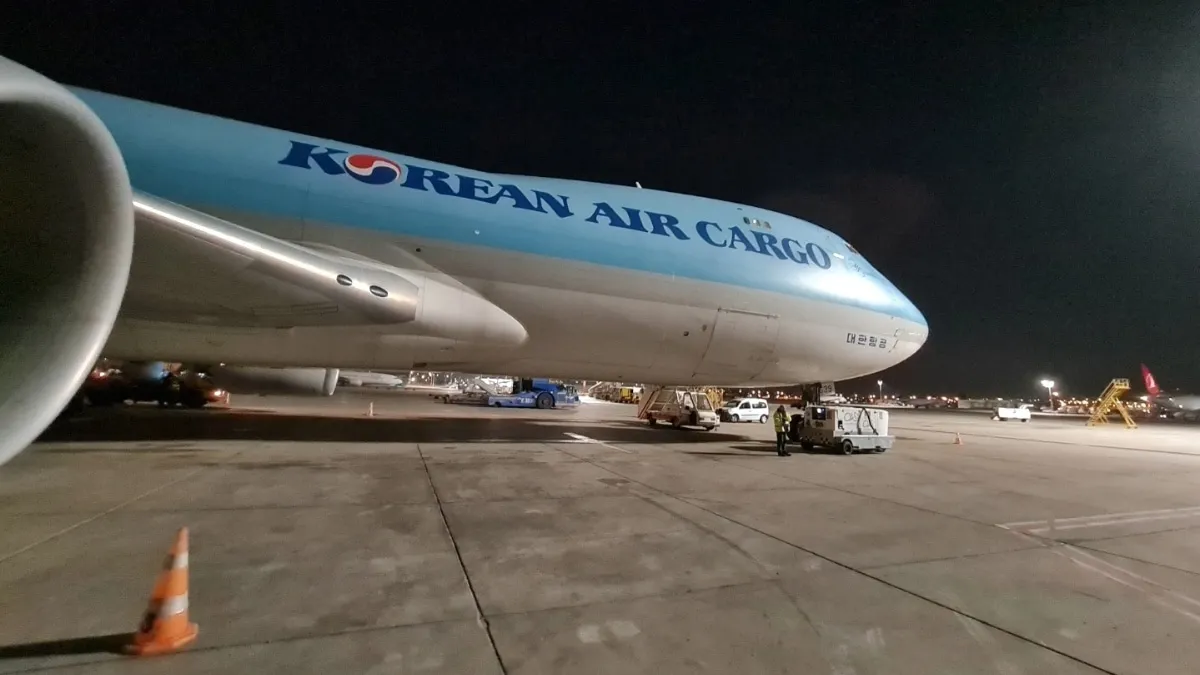
Alongside global merger developments, the company's Israeli representation is closely monitoring the situation. Jalal Siksik, Korean Air Cargo Station Manager in Israel, notes that the company is exploring the possibility of resuming operations in Israel in the future, subject to market conditions and the security situation.
The resumption of the direct route to Seoul, once decided, is expected to provide Israeli importers and exporters with enhanced access to the unified group's expanded network, including unprecedented connectivity to destinations in Japan, Australia, and Southeast Asia.
For the logistics community, Korean Air's return could be particularly significant due to its robust cargo arm. According to the company's 2025 reports, the cargo division transported approximately 1.54 million tons and generated revenues of about $3.26 billion (representing 26% of total company revenue). The airline operates a dedicated fleet of 23 freighters, including the B777F and B747-8F heavy-lift models, enabling the transport of heavy and sensitive cargo on strict schedules.
The mega-merger with Asiana Airlines, which began in 2020, includes not only the consolidation of fleets (currently numbering 165 aircraft for Korean Air alone) but also the unification of subsidiaries under the Jin Air low-cost brand.
As part of the process, Asiana Airlines has already moved its operations at Incheon Airport to the advanced Terminal 2, where Korean Air operates alongside its strategic partner, Delta Air Lines. The merger is also expected to shift the aviation alliance landscape, as Asiana transitions from Star Alliance to Korean Air’s SkyTeam alliance.
Financially, Korean Air demonstrated impressive resilience in 2025 with revenues of approximately $12.2 billion (a 2% increase over the previous year). Despite massive investments in merger processes and the impact of fuel prices, the company recorded a net profit of about $715 million and continues to invest hundreds of millions of dollars in fleet renewal, focusing on B787-10 Dreamliner aircraft and upgrading premium cabins.