

The panel “On the Waterline – Where are Israel's Ports Heading?” held at the PORT2PORT 2025 conference, provided a direct and open look into one of the critical sectors of the Israeli economy – the ports and maritime trade. The panel was moderated by journalist Keren Marciano, with participants including David Cohen, acting CEO of Haifa Port Company; Nissan Levy, CEO of Ashdod Port; Yoav Zukerman, Deputy CEO of Bay Port SIPG; Pinchas (Pino) Tzruya, CEO of Israel Ports Company; and Zvika Schechterman, CEO of Israel Shipyards Industries.
The discussion opened with the burning question of why long queues of general cargo ships are recorded outside the ports.
Zvika Schechterman, CEO of Israel Shipyards Industries, emphasized that this is a cyclical phenomenon resulting from events such as the coronavirus and war, but according to him, "the problem is not in the operation of the ports but in their success". Schechterman added: If there are five restaurants on the street and everyone is queuing in just one restaurant - probably the food there is good. We are currently operating five ships in parallel, six hands, 24/7. This is a pace that no other port has.
Yoav Zukerman, Deputy CEO of Bay Port SIPG, presented a complete picture: "In general cargo, competition exists, but you have to understand the economy behind it - when unloading a car yields 1,400 shekels and general cargo 70 shekels per ton, it is difficult to prefer general cargo. Therefore, Israel Shipyards Port is the strongest in this field - it works on it around the clock."
David Cohen, acting CEO of Haifa Port, referred to the issue of the new arrangement in the ports, and the need for fair competition: "There is no refusal to arrange - we are part of the process. But the solution is not just to add a wharf or warehouse. There needs to be equal competition and balanced conditions. You can't expect us to lose money just in the name of 'public service'. The state must create a real competition model."
Pinchas Tzruya (Pino), CEO of Israel Ports Company, emphasized the national responsibility of the ports: "The ports are the gateway of the State of Israel. Goods cannot be left outside just for economic considerations. There is a systemic responsibility - the state cannot afford queues of ships off the coast."
Nissan Levy, CEO of Ashdod Port, presented a strategic change that the port has undergone in the past year: "We are not a car warehouse. We went back in this field, and tripled the activity of general cargo. We invested in specialized wharves, and the grain elevator works in cooperation with Han. The problem is not technical - it is systemic. But we are progressing."
Later, the topic of grain infrastructure came up, and the need for new investments. Schechterman reported that for the first time in decades, an innovative facility is being built with an investment of about 300 million shekels: "We are building an infrastructure that is among the leading in the world, with fast and efficient unloading capability. This is real good news for the basic food sector in Israel."
The discussion reached its peak when talking about the potential of land shipping to Jordan, Saudi Arabia, and the Emirates. Zukerman said: "If the possibility of transferring goods through Jordan to Saudi Arabia and the Emirates opens up - it is a regional revolution. The British did not build Haifa Port for the small village next door, but to reach Baghdad and the Gulf. This potential still exists."
Tzruya agreed and added: "This is a tremendous national opportunity. Comprehensive planning is needed - from the maritime line, through the wharves and the port hinterland, to railway and road infrastructure to Jordan. Israel can become a regional gateway for trade between East and West."
Cohen summed up in a sober tone: "The Israeli market is still not sophisticated. As long as there are no equal competition conditions, the picture will not change. The market will only stabilize when we all compete for the goods - then we will know that the competition is real."
Marciano ended the discussion with a sharp statement: "It seems that the solutions are still far away, but at least everyone here is in the same boat - and that's a good start."
PORT2PORT Conference: Port Managers Call for National Planning, Not Just Cargo Competition
At the PORT2PORT 2025 conference, port managers discussed the need for national planning in addition to competition for cargo, addressing issues like long queues of cargo ships and the potential for land shipping to Jordan, Saudi Arabia, and the Emirates.
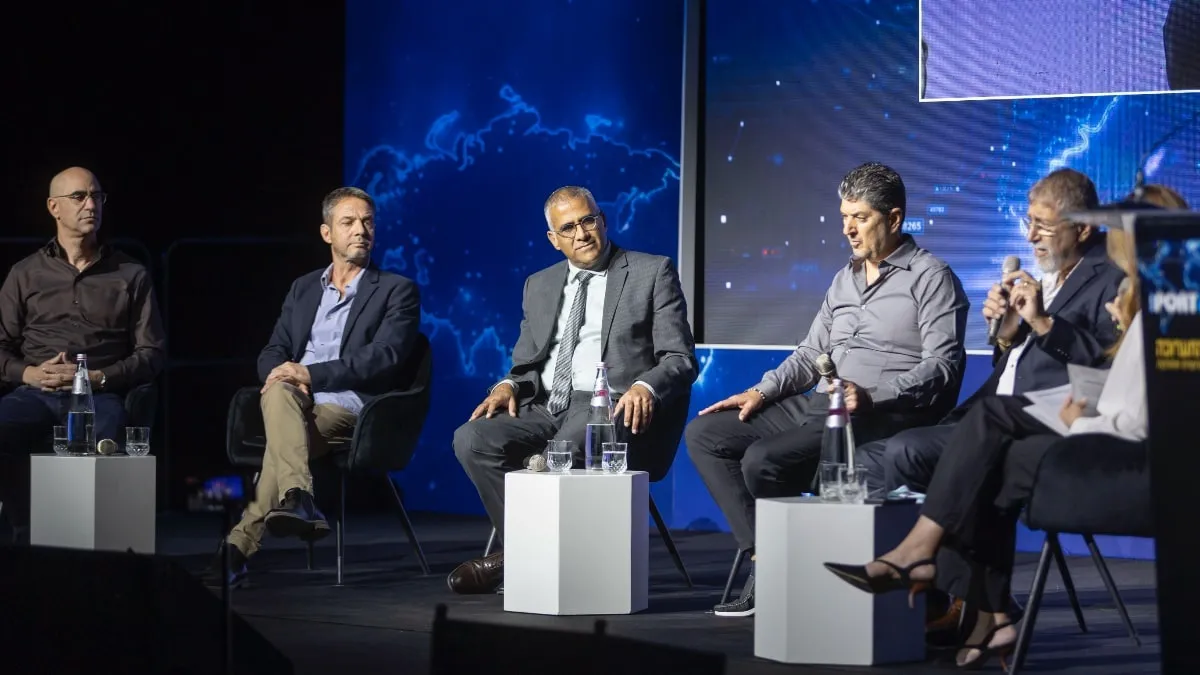
PORT2PORT Conference: Port Managers Call for National Planning, Not Just Cargo Competition
-
 Found it useful? Share
-
 Share on Facebook
-
 Share on X
-
 Share on LinkedIn
-
 Share via Email
-
 Share on WhatsApp
-
 Print Article
Found it useful? Share
Related
 30.10.2025
Gadot Mercury Expands Operations with Acquisition of Mintz Lab Systems
 29.10.2025
PORT2PORT 2025: Amir Hayek Foresees Growth of Abraham Accords
 29.10.2025
PORT2PORT 2025 Conference: A Resounding Success with Industry Leaders
 23.10.2025
OnAir Critical Receives ISO 23412 Certification in Temperature-Controlled Shipping
 20.10.2025
PORT2PORT 2025 Conference and Exhibition: Bigger and Better Than Ever
 29.09.2025
Fridenson Generation Officially Inaugurates New Logistics Center in Haifa