

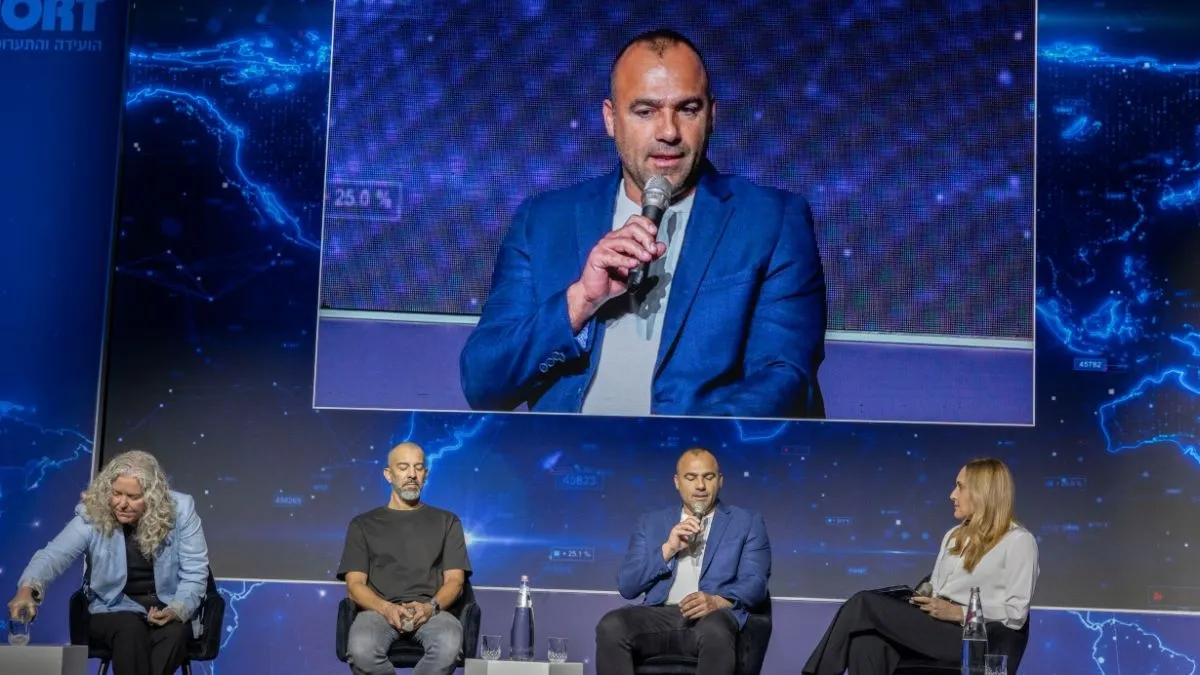
Recent actions by the Trump administration, trade wars, and regulatory delays worldwide are forcing the global supply chain to adapt to a rapidly changing reality. At the PORT2PORT 2025 conference, industry leaders gathered for an open discussion on the challenges, opportunities, and necessary adjustments for a year of increasing uncertainty.
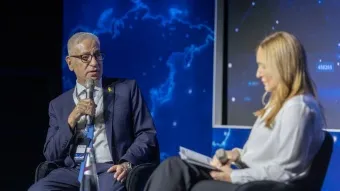
The panel included Erez Segs, CEO and founder of iBundle; Yossi Menashe, CEO of Altshuler Shaham Financial Services; and Sigal Menahem Katzovich, CEO of DSV Israel.
Erez Segs, CEO and founder of iBundle, began by directly addressing American trade policy: "Trump's policy has completely changed the way exporters from around the world supply products to the United States. Players need to learn the new game and make adaptations. The regulation has changed, the customs have changed, and the way the American consumer buys products has completely changed."
According to him, the change also created great opportunities for those willing to adopt innovation: "There is a tremendous opportunity here for those who adopt technologies and know how to solve the failures through different channels. It requires flexibility, speed, and a deep understanding of the supply chain."
Segs added: "Businesses need to be much more flexible, and build several scenarios in parallel. Using our arsenal of technological tools that streamline and improve the entire supply chain process. Israeli companies that know how to move quickly and not be fixed succeed in getting back on track faster."
In relation to the opportunities created following the trade agreements and regional openness, Segs said: "Israelis know how to adopt quickly. We are a startup nation. Whoever builds the right combination of advanced warehouses in the US and production in Asia, and knows how to respond in real time to regulatory changes, will maintain a real competitive advantage."
Yossi Menashe, CEO of Altshuler Shaham Financial Services, addressed the global and Israeli economic picture in a period of high volatility: "We see the markets breaking records, both in the world and in Israel. This is an abnormal anomaly after all we've been through, no one expected it. There aren't many rational explanations, except that the market is probably still optimistic. There is a lot of money waiting outside and wants to know what will happen."
According to him, expectations for interest rate cuts contribute to the current euphoria: "There is an expectation for an interest rate cut both in the United States and here, and it pushes the markets up along with the hype around AI that reduces costs. We see Amazon laying off thousands of workers, and it's part of the global efficiency process."
However, Menashe emphasized that the markets could change quickly: "Everything looks good right now, but the market is very volatile. Two months ago we already saw sparks of a credit crisis in banks in the United States. It's hard to know where it will go."
In relation to the impact on Israeli exporters and importers, he said: "Beyond political uncertainty, we see importers looking for alternatives to countries like Turkey. The dollar-shekel exchange rate fluctuates sharply, standard deviations rose and then fell slightly. In the end, whoever manages risks correctly sets rates, hedges, and creates certainty."
And to conclude, he added: "I think the risk of declines is higher than the chance for further increases. We've gone up a lot, and caution is needed to hedge where possible, move to safer assets, and not rely on momentum alone."
Sigal Menahem Katzovich, CEO of DSV Israel, referred to the ongoing change in the global production map: "The production map is changing all the time, and we see it as a global company. The volatility affects a lot, but factories are not moved in a second. It's a process of years. There are customers who move production from China to Hungary and then encounter another war. The whole world is in uncertainty."
According to her, companies are very cautious in their actions: "We see movement from China to Vietnam and Indonesia, but everyone is cautious. No one really knows what will happen."
She later explained how a global network like DSV manages to provide security to customers even in volatile times: "A global company has a decade-long planned and orderly plan. There is money to finance it. It's real financial resilience. Just this year we bought a competing company for 14 billion euros in cash. In the last nine years, we have bought four giant companies, and we still only hold 7% of the global market."
Menahem Katzovich emphasized the global advantage for Israeli customers: "When talking about expanding the Abraham Accords, we are already there in Bahrain, Saudi Arabia, Abu Dhabi, and Dubai. We manage huge logistics projects. The advantage is that we are not just agents in Israel we are part of the global network itself. I can pick up the phone to the CEO in Turkey or Greece and sew a solution within minutes. That's the real difference."
All three speakers agreed that 2026 will be marked by flexibility, technology, and constant preparation for global changes.
Between Trump and China: The Supply Chain Faces a New Global Order
Industry leaders discuss the challenges, opportunities, and adaptations required for the global supply chain in a rapidly changing world, amid trade wars and regulatory delays.
12:32 ,05.11.2025
Between Trump and China: The Supply Chain Faces a New Global Order
-
 Found it useful? Share
-
 Share on Facebook
-
 Share on X
-
 Share on LinkedIn
-
 Share via Email
-
 Share on WhatsApp
-
 Print Article
Found it useful? Share
Related
 03.11.2025

DHL Express Israel CEO, Yonatan Ivgi, Outlines Optimistic Forecast for 2026
 02.11.2025
Ofer Bloch: 'Israel Lacks Strategic Supply Chain Planning'
 30.10.2025
PORT2PORT Conference: Port Managers Call for National Planning, Not Just Cargo Competition
 30.10.2025
Gadot Mercury Expands Operations with Acquisition of Mintz Lab Systems
 29.10.2025
PORT2PORT 2025: Amir Hayek Foresees Growth of Abraham Accords
 29.10.2025
PORT2PORT 2025 Conference: A Resounding Success with Industry Leaders