 Found it useful? Share
 Share on Facebook
 Share on X
 Share on LinkedIn
 Share via Email
 Share on WhatsApp
 Print Article
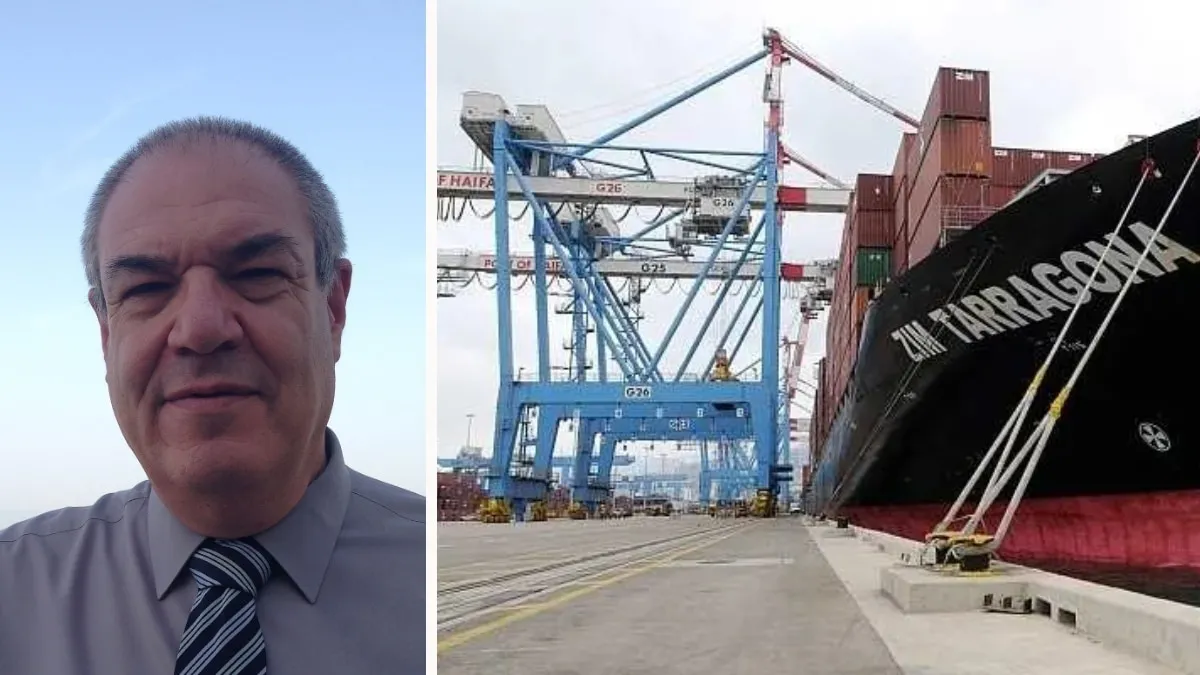
Dr. (Senior Captain) Yigal Maor, former Director General of the Israeli Administration of Shipping and Ports (ASPA) and one of the leading figures in Israel's maritime industry, has published a comprehensive professional opinion providing operational and strategic backing for the establishment of "New ZIM" as part of the deal to sell ZIM shares to Hapag-Lloyd and the partnership with FIMI Opportunity Funds.
The opinion, written as a direct response to the opposing views of Major General (Res.) Giora Eiland and the current Director General of ASPA, Captain Zadok Radker, decisively states that the public debate suffers from a fundamental distortion.
In his remarks, Maor attacks the "fire sale" claims: "The opposition to the sale deal and the establishment of 'New ZIM' relies on a populist narrative, an incomplete analysis of national and international maritime trade components, and an ignorance of the fact that most of the 'Old ZIM' fleet today is under foreign and dispersed ownership."
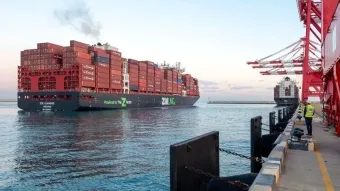
As a reminder, in February this year, ZIM announced a merger agreement under which it would be acquired by Hapag-Lloyd at a valuation of approximately $4.2 billion, alongside the establishment of "New ZIM" controlled by FIMI—an Israeli company that will operate 16 ships on "Home Lines," manage local trade, and hold the State's Golden Share.
Ownership Structure: From Corporate Risk on the NYSE to Pure Israeli Ownership
Maor, bringing nearly 50 years of industry experience, explains that approximately 88% of "Old ZIM" shares are currently held by dispersed foreign investors and entities through the New York Stock Exchange (NYSE). This situation places the company under a board of directors exposed to the financial influences of foreign capital, including funds managing capital from Gulf states.
In contrast, "New ZIM" will be under full and pure Israeli ownership controlled by FIMI, whose owners' reputation regarding national and patriotic aspects is, according to him, "proven and beyond any doubt." This structure "completely clears any shadow of a chance for foreign influence on the company's behavior, policy, and activities, ensuring full mobilization and absolute compliance with the needs and laws of the State of Israel at all times."
Emergency Availability: The Myth of the "Giant Fleet" vs. Home Lines
On the operational level, the opinion refutes the fear of losing a fleet of about 100 ships, clarifying that most ships in ZIM today are chartered rather than owned. In terms of actual owned ships, the "New ZIM" fleet is of a similar scale. Furthermore, while ZIM's current fleet is scattered across distant oceans and its availability to reach Israel in an emergency "tends toward zero," the new company will focus its activities on "Home Lines" in the Mediterranean and the Atlantic Ocean.
"New ZIM bases its ship operations with an emphasis on Home Lines. The entire fleet under its operation calls at Israeli ports during routine times, which grants the state operational availability and immediate access to mobilize owned vessels during emergencies, at a level of availability that has not existed for many years in 'Old ZIM'."
"The opposition to the sale deal and the establishment of 'New ZIM' relies on a populist narrative, an incomplete analysis of national and international maritime trade components, and an ignorance of the fact that most of the 'Old ZIM' fleet today is under foreign and dispersed ownership."
Surge in Representation of Israeli Sailors and Officers
Another central pillar concerns human capital. Maor notes that the regulatory compliance obligation for ships arriving in Israel requires a captain and 6 officers (compared to a captain and 2 officers in a large part of ZIM's current fleet), representing a 133% increase in positions per ship.
The new structure will create approximately 84 open positions (equivalent to about 135 Israeli officers and captains)—"an employment volume considered imaginary and without chance in 'Old ZIM'." Additionally, the company will become a "maritime incubator" and actively invest in the Maritime Training Institute in Akko.
Financial Robustness and FIMI's Commitment Under the Deal
On the economic front, Maor notes that "New ZIM" enters the market without procurement debts on the modern fleet it will receive, backed by a mechanism of commercial agreements with Hapag-Lloyd that ensures its profitability and robustness for the first decade.
As part of the deal, FIMI has committed to ensuring the continuity of the State of Israel's Golden Share in the "New ZIM" articles of association, providing full Israeli ownership, and cooperating with the state in refreshing and updating historical share clauses to fit Israel's current security and trade needs. Maor concludes that "New ZIM is not a blow to the national interest; on the contrary, it is an unprecedented strategic upgrade."
| Parameter / Point of Contention | Current Situation in "Old ZIM" | Strategic Advantage in "New ZIM" (Dr. Maor's Opinion) |
|---|---|---|
| Ownership Identity & Foreign Risk | ~88% held by dispersed foreign hands on NYSE. Board exposed to Gulf capital influences. | Full and pure Israeli ownership (FIMI). Prevents foreign influence and ensures state compliance. |
| Fleet Size and Ownership | Most of the fleet (~100 ships) is chartered. Actual owned fleet is much smaller. | Modern owned fleet without procurement debt, with full freedom to charter and expand. |
| Emergency Availability | Global fleet scattered across distant oceans. Emergency availability to Israel tends toward zero. | Fleet focused on "Home Lines" (Med & Atlantic). Regularly calls at Israel and available for immediate mobilization. |
| Israeli Officer Employment | Only ~60 active sailors. Lenient manning requirements (3 officers/ship in part of fleet). | Surge to 84 positions (~135 officers) due to mandatory Israel calls (7 officers/ship). |
| National Maritime Training | Minimal involvement in training, only as strictly required by law. | Active partnership, investment in Akko training institute, and building coastal reserves. |
| Financial Resilience | Medium global company exposed to severe erosion in global oversupply. | Debt-free fleet + safety net and commercial agreements with Hapag-Lloyd for 10-year profitability. |
| Golden Share & Regulation | Golden share in historical structure from decades ago. | Full commitment to Golden Share, call to update clauses and promote "Tonnage Tax" law. |