 Found it useful? Share
 Share on Facebook
 Share on X
 Share on LinkedIn
 Share via Email
 Share on WhatsApp
 Print Article
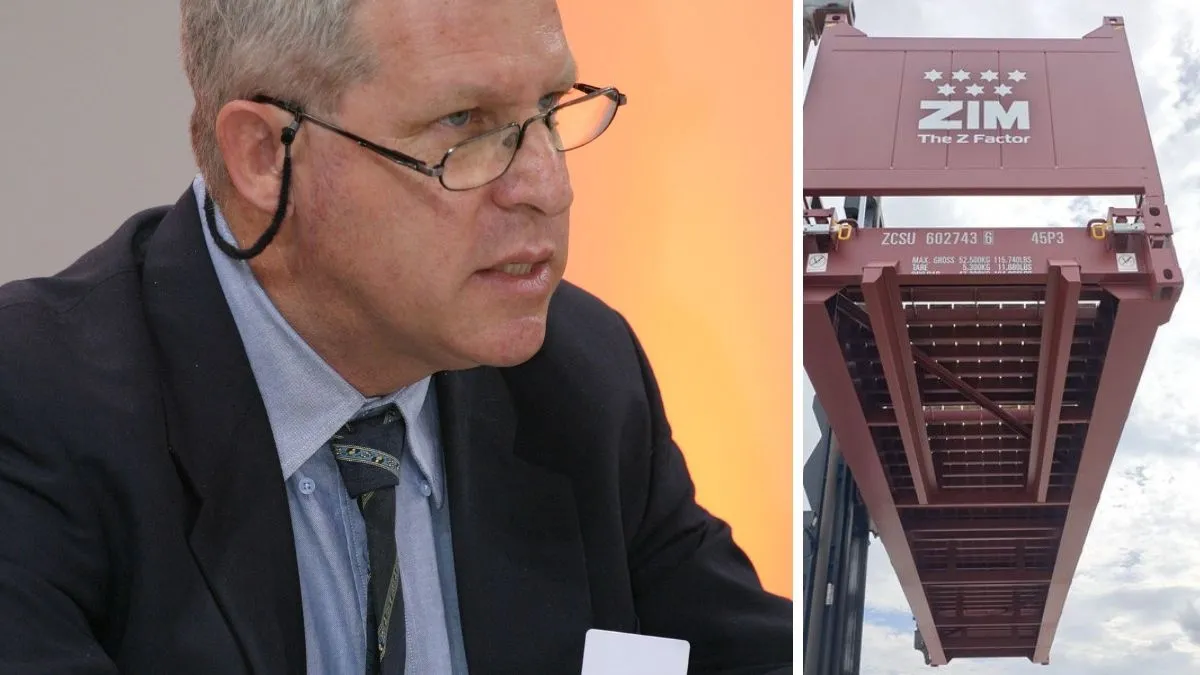
Major General (Res.) Giora Eiland recently submitted an updated expert opinion casting a heavy shadow over the deal to sell ZIM Integrated Shipping Services to the German shipping giant Hapag-Lloyd. The document, obtained by PORT2PORT, analyzes ZIM's position as a "critical strategic asset" and determines that the current framework endangers Israel's ability to function as an "island nation" under siege.
Major General (Res.) Giora Eiland stated in a dramatic opinion: "The 1995 Golden Share is a joke compared to the threats of 2026." Eiland reveals that the transition to Hapag-Lloyd's control, in which Qatari and Saudi entities hold stakes, would leave Israel without a maritime lifeline during wartime.
According to Eiland, the resilience of a small nation like Israel relies on the ability to mobilize private and public resources during times of crisis. Alongside the familiar reserve mobilization, Eiland points to the critical need for mobilizing vessels and aircraft. "The reliance on civilian means is particularly efficient, as the state does not bear maintenance costs during routine times but receives an immediate operational response in emergencies," the report notes.
Eiland's opinion reinforces what we have been saying all along—that ZIM is a strategic company for the Israeli economy. The Israeli government must seriously consider the Israeli proposal before decisions are made, says Oren Caspi, Chairman of the ZIM Workers' Union.
The opinion emphasizes that the threat landscape against Israel has grown significantly in recent years, now including not only missile attacks but also attempts at naval blockades and economic boycotts. In these scenarios, ZIM serves as a stabilizing factor, as its status as a large company with global deployment allows it to make decisions and allocate resources beyond the dry requirements of the law.
The Golden Share: No Longer Sufficient?
Eiland decisively states that the Golden Share conditions set in 1995 no longer match the reality of 2026. He reveals a worrying figure: while ZIM currently operates with a fleet of 99 ships providing immense flexibility, the proposed framework leaves only 16 ships under direct Israeli control ("The New ZIM")—a quantity insufficient for a broad logistical response during a crisis.
The opinion mentions that in the last two years alone, ZIM proved its vitality by transporting sensitive equipment for defense industries and even returning medical teams to Israel on cargo ships when airlines were grounded. "A small and limited company will not be able to offer this flexibility," Eiland warns.
In conclusion, the opinion warns that selling the company or harming its capabilities could leave Israel without a vital response in extreme scenarios of a naval siege.
Workers' Union: "Topple the German Proposal"
Oren Caspi, Chairman of the ZIM Workers' Union, commented to PORT2PORT regarding Eiland's updated opinion: "We expect that in light of the Israeli proposal ZIM has received, the Israeli government will topple Hapag-Lloyd's acquisition bid and choose an Israeli company. Eiland's opinion reinforces what we have been saying all along—that ZIM is a strategic company for the Israeli economy. The government must seriously consider the Israeli proposal before decisions are made."
| Subject for Review | Key Points of Giora Eiland's Opinion (2026) |
|---|---|
| Geopolitical Context | Israel is an "island nation" completely dependent on sea routes. 2026 threats (precision missiles, UAVs, and naval blockades) require direct Israeli control over the shipping fleet. |
| Foreign Ownership Risk | Hapag-Lloyd is partially owned by Qatari and Saudi Arabian entities. In an emergency, conflict of interest will prevent the diversion of resources for Israel's benefit. |
| Reduction of the Israeli Fleet | Transition from a flexible fleet of 99 ships to a limited fleet of only 16 ships ("The New ZIM"). This quantity does not allow for a broad national logistical response. |
| The Golden Share | The conditions set in 1995 are irrelevant to the current reality. The state's official authority in this share is no substitute for committed Israeli management. |
| Support for Defense Industries | ZIM is the lifeline for Elbit, Rafael, and Israel Aerospace Industries (IAI). Foreign companies may refuse to transport sensitive equipment (explosives, etc.) during wartime. |
| The Bottom Line | Selling ZIM in the current framework is a dangerous gamble on national security. An Israeli buyer or a "safer" alternative should be preferred. |