 Found it useful? Share
 Share on Facebook
 Share on X
 Share on LinkedIn
 Share via Email
 Share on WhatsApp
 Print Article
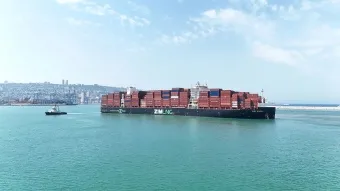
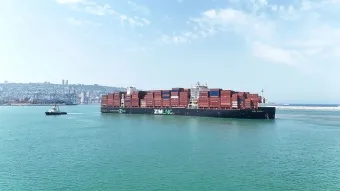
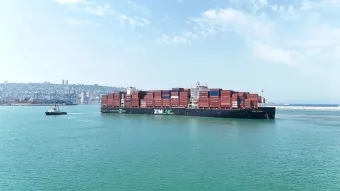
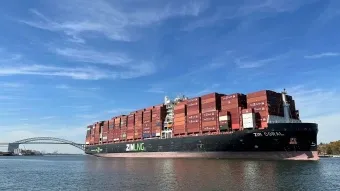
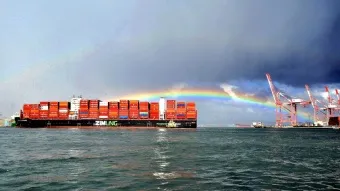
The Maritime Policy and Strategy (MPS) Institute published a sharp position paper today stating that the sale of the ZIM shipping company to foreign hands constitutes a strategic danger to the State of Israel's resilience. According to the paper, the fact that ZIM ensures maritime supply chain resilience—the infrastructure through which approximately 99% of the country's foreign trade passes—requires the government to exercise its "Golden Share" veto right and block the transfer of control to the German giant Hapag-Lloyd.
The institute emphasizes that the acquisition offer exposes a critical vulnerability: international shipping operates according to economic considerations that do not always align with the state's needs during emergencies. As an example, the case of the Chinese company COSCO is cited, which ceased calling at Israeli ports during the "Iron Swords" war for political reasons. The central warning is that in a situation of an attack on Israeli ports, there is no certainty that foreign companies, sometimes influenced by capital and interests from countries like Qatar and Saudi Arabia, would agree to arrive in Israel even in exchange for financial incentives.
The head of the institute, Prof. Shaul Chorev, argues that the policy established during ZIM's privatization is no longer relevant to the current geopolitical reality. According to him, Israel needs an "Iron Fleet" under full Israeli control to ensure the arrival of essential supplies under fire. The position paper notes that even the involvement of the FIMI Fund in the deal does not guarantee the government the full right to operate the company's ships as an emergency fleet if necessary.
Alongside the structural aspect, a report by research fellow Dr. Polina Baum-Talmor reveals a deep crisis in Israel's maritime manpower. The report points to a gap between regulatory requirements and the shortage of Israeli naval officers due to high burnout. "Our maritime independence depends on local human infrastructure," noted Dr. Baum-Talmor, warning that without massive investment in training and branding the profession, the state will be left with ships but no seafarers to sail them in the moment of truth.
In light of the findings, the institute recommends that the government formulate a new strategy to secure a minimum mix of Israeli-owned container, bulk, and tanker ships. Among the recommendations: accelerated training for seafarers, the gradual elimination of exemptions from local manning requirements, and the creation of a government insurance cover plan for ships to ensure the movement of goods even under direct security threats.