

Israel's trade deficit in goods amounted to approximately 10.2 billion shekels in December 2025, according to data from the Central Bureau of Statistics. The export volume for this month stood at about 18.1 billion shekels, while imports totaled approximately 28.3 billion shekels.
On an annual basis, total exports in 2025 stood at about 193.8 billion shekels, compared to 209.4 billion shekels in 2024, while annual imports totaled 326.9 billion shekels. The annual trade deficit in goods reached 133.1 billion shekels, compared to 126.9 billion shekels in the previous year.
According to trend data for the last quarter of the year (October-December 2025), a recovery in trade activity was recorded: goods exports (excluding ships, aircraft, and diamonds) increased at an annual rate of about 11%, after a decline in the previous quarter. Simultaneously, goods imports increased at a similar rate of about 11.1%.
In the shipping and logistics industry, it is noted that these data reflect a gradual return to cargo movement, both in sea routes and air shipping, after a prolonged period of operational uncertainty due to the war and its effects on the economy.
Industrial exports continue to constitute the bulk of Israeli exports, with about 95% of exports in December being industrial. Particularly notable was a sharp increase in the export of high-tech industries, led by the production of components and electronic boards, which jumped by about 42.9% at an annual rate. Also, the export of transportation and hauling equipment recorded a sharp increase of about 44.5%.
Industry sources estimate that this growth supports an increase in demand for air shipping, mainly on routes to North America and Europe, due to the high-value characteristics of the cargo, sensitivity to delivery times, and global supply chains.
On the import side, a significant increase was recorded in the import of investment goods, which grew by about 35.4% on an annual basis in the last quarter of 2025. The import of passenger cars for business purposes stood out in particular with a jump of about 66%. At the same time, the import of raw materials returned to an upward trend, after declines recorded during the year.
In the industry, it is noted that an increase in the import of investment goods and raw materials is expected to be reflected in growth in the activity of sea ports, handling of containers and general cargo, and also in deepening activity in logistics centers and terrestrial transportation systems.
The Central Bureau of Statistics notes that the trade data for December were also affected by changes in exchange rates, as the shekel strengthened against the dollar and other currencies - a factor that directly influences the volumes of imports and exports. The data for 2025 are preliminary, and final data are expected to be published in May 2026.
Israel's Trade Deficit Hits 10.2 Billion Shekels in December 2025
Israel's trade deficit reached 10.2 billion shekels in December 2025, with a yearly deficit of 133.1 billion shekels. The data shows a gradual return to cargo movement after a period of operational uncertainty.
10:21 ,14.01.2026
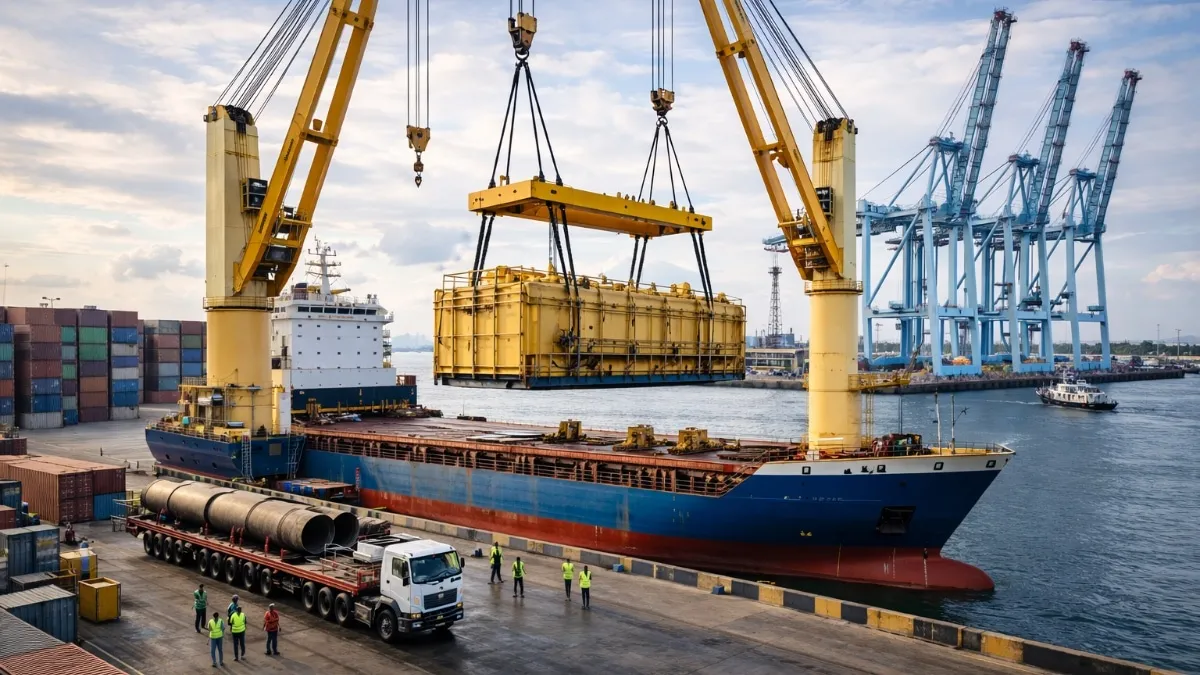
Israel's Trade Deficit Hits 10.2 Billion Shekels in December 2025
-
 Found it useful? Share
-
 Share on Facebook
-
 Share on X
-
 Share on LinkedIn
-
 Share via Email
-
 Share on WhatsApp
-
 Print Article
Found it useful? Share
Related
 30.12.2025
Gadot Group Releases First ESG Sustainability Report
 23.12.2025
Eilat Port Initiates Independent Car Import Line from the East
 03.11.2025
Sweeping Arrests in Corruption Scandal, Histadrut Leader Detained
 31.08.2025
Turkey Imposes Airspace Restrictions on Israeli Government Flights
 15.07.2025
Gadot Group Takes Over Green Oil's Recycling Facility
 16.06.2025
'A Public Humiliation': Israeli Stands Covered at Paris Air Show