 Found it useful? Share
 Share on Facebook
 Share on X
 Share on LinkedIn
 Share via Email
 Share on WhatsApp
 Print Article
The Israeli government has approved a large-scale transportation investment plan for the Northern District for the years 2026-2030, totaling approximately a quarter of a billion shekels. The plan focuses on expanding major freight corridors, upgrading regional connectivity, and examining the economic feasibility of new routes. It aims to strengthen the infrastructure supporting the northern region, streamline access to employment and commercial centers, and support the area's functional continuity.
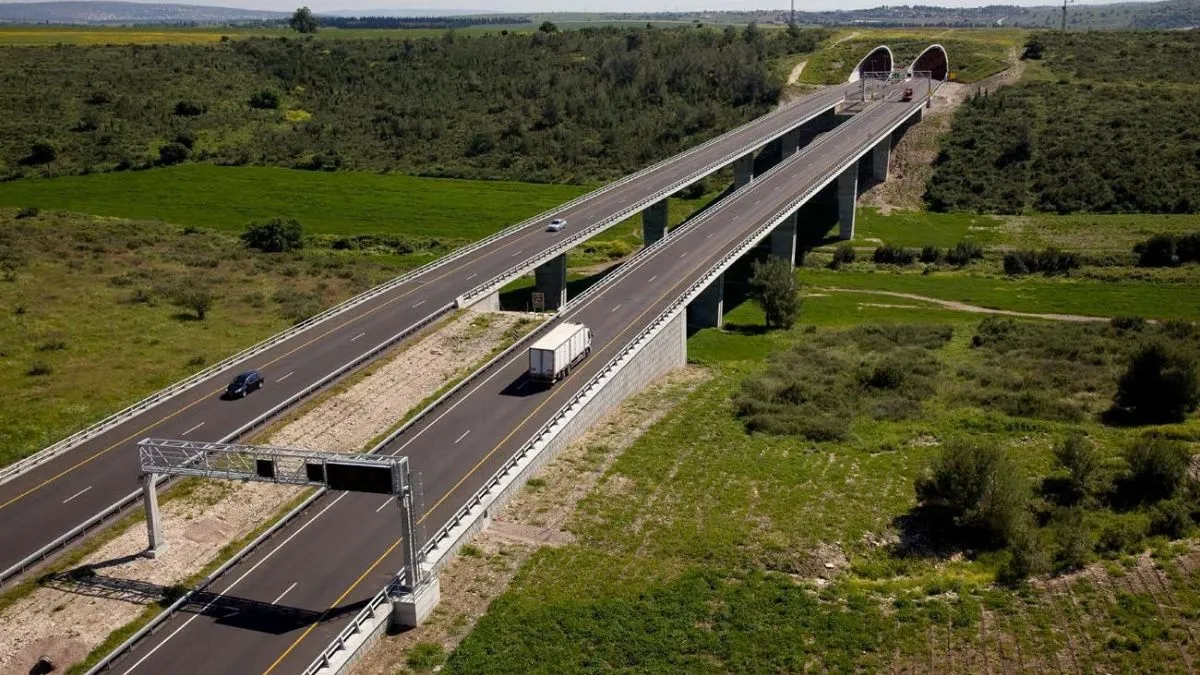
As part of the spatial development plan for the Northern District, the Israeli Ministry of Transport and Road Safety is expected to promote a series of significant infrastructure projects. Notable projects include an investment of NIS 125 million in detailed planning and execution for expanding Route 75 in the Ramat Gabriel-Yafa section into a dual-carriageway, alongside an allocation of NIS 15 million for preliminary planning to expand Route 805 between Arraba and Sakhnin.
Simultaneously, in the city of Safed, the Independence Road project (Route 8678) will be completed with an investment of NIS 45 million by 2028. Preliminary planning will also advance for expanding Route 768 in the Tiberias-Safed area into a dual-carriageway with an investment of NIS 5 million. In Akko, the preliminary planning for the Akko East integrated transport hub, at the junction of Routes 4 and 85, will be completed with an investment of NIS 10 million, aiming to improve the capacity and accessibility of mass transit systems.
The decision also includes an economic feasibility study for a new lateral road connecting Afula to Kfar Baruch, running parallel to the Jezreel Valley Railway up to the Tel Kashish Interchange. Within the framework of the next five-year plan, the expansion of Route 71 in the Navot-Afula section (approximately 7 km), the expansion of Route 66 in the Tishbi-Megiddo section, and the promotion of detailed planning for Route 675 in the Navot-Sargal section will be examined. These lateral axes constitute critical freight corridors for transporting cargo and goods from the ports and logistics centers to the interior of the country.
Alongside these projects, a requirement was formulated to promote additional urgent transportation solutions, including: constructing a new access road to the Tomb of Rabbi Meir Baal HaNes from Route 90, completing the Hasmonean axis as a Tiberias bypass road, and an advanced connection of the city of Safed to the planned railway station in the Zahar (Zefat-Hatzor-Rosh Pina) industrial zone. Concurrently, the Ministry of Transport will formulate a comprehensive strategic plan for the public transport system in the district in cooperation with regional clusters, aiming to strengthen connectivity to employment hubs and core cities.
Minister of Transport Miri Regev stated: "The 'Connecting Israel' vision is taking practical shape on the ground. We are promoting an advanced and safe transportation network that will connect northern communities to core cities and the center of the country, reduce congestion, and allow the region to realize its great growth potential."
Director General of the Ministry of Transport and Road Safety, Moshe Ben Zaken, added: "The plan combines investment in field projects with long-term planning of the transportation system in the north. Expanding major roads, establishing integrated transport hubs, and improving the connection to public transport will create a more efficient, safe, and advanced regional system."