 Found it useful? Share
 Share on Facebook
 Share on X
 Share on LinkedIn
 Share via Email
 Share on WhatsApp
 Print Article
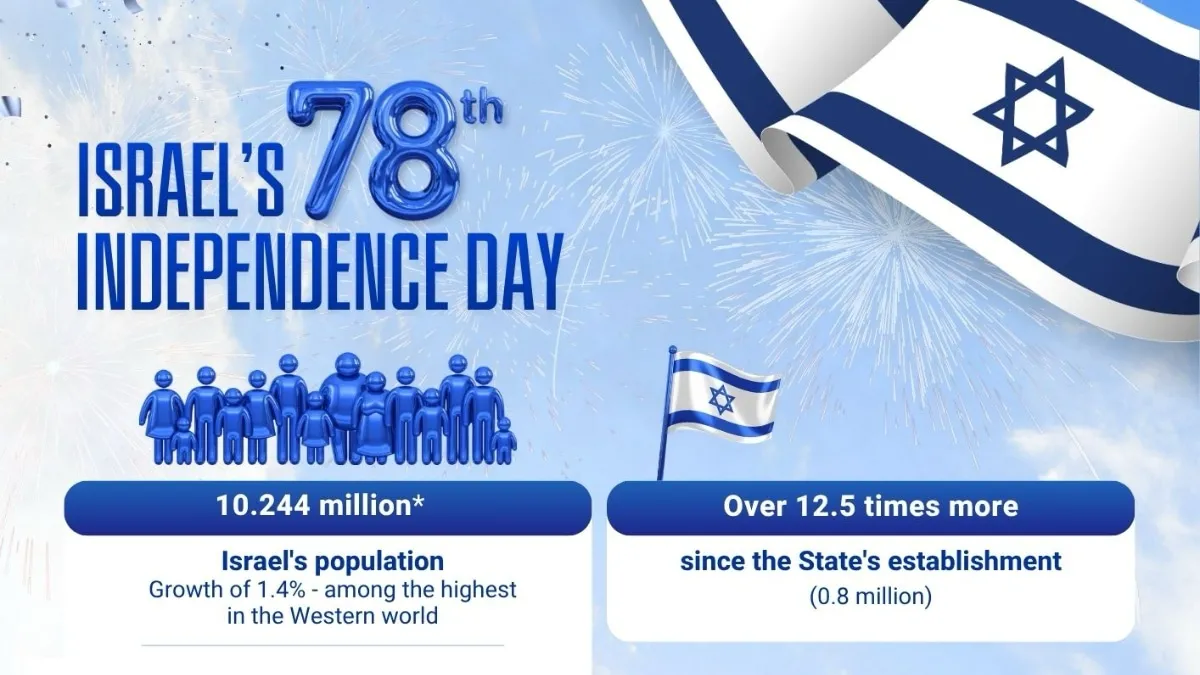
The State of Israel marks its 78th Independence Day with a significant demographic milestone: the country's population now stands at 10.244 million people, a 12.5-fold increase since its establishment. The data, published as part of an annual review, reveals a country in a consistent trend of expansion, a figure that places a heavy responsibility on the infrastructure, ports, and national supply chain sectors.
According to the data, approximately 7.790 million residents are Jews and others (76%), about 2.157 million are Arabs (21.1%), and approximately 296,000 are foreign citizens. In the past year, the population grew by 146,000 people, a growth of 1.4%. An analysis of the growth components shows that natural increase (177,000 births) and Aliyah (21,000 immigrants) are the primary growth engines, compared to a negative migration balance of about 45,000 Israelis staying abroad.
Economic Significance: Increased Consumption and Supporting Infrastructure
For the logistics and trade community, the most interesting figure lies in the age composition: Israel continues to hold the title of a "young country" compared to Western nations. About 27% of the population are children and teenagers (ages 0-14), compared to only 13% aged 65 and over. This demographic structure ensures a productive workforce for years to come, but at the same time requires long-term logistical preparation.
The rapid population growth and the dominance of young age groups translate directly into an increase in demand for private consumption, food, pharmaceuticals, and residential infrastructure. These figures emphasize the critical need for expanding port capacities, improving land connectivity, and establishing modern logistics centers (LDCs) that can cater to a country whose growth rate is among the highest in the developed world.
On a national level, Israel is becoming the center of gravity for world Jewry, with 45% of all Jews in the world currently living in Israel, and the vast majority (81%) being "Sabras" (native-born). This demographic stability, despite the challenges of the security situation, constitutes a significant anchor for the growth forecasts of the Israeli economy in the coming decade.
| Demographic Index | Data and Segmentation |
|---|---|
| Total Population | 10.244 million (1.4% growth) |
| Young Population (0-14) | 27% (Future consumption engine) |
| Natural Increase (Past Year) | Approx. 177,000 births |
| Migration Balance (Israelis) | -45,000 (Israelis staying abroad) |
| Percentage of "Sabras" | 81% of all Jews in Israel |