 Found it useful? Share
 Share on Facebook
 Share on X
 Share on LinkedIn
 Share via Email
 Share on WhatsApp
 Print Article
The Knesset Economic Committee has begun preparing the Franchised Airports Bill for its second and third readings. The bill aims to regulate, for the first time in Israel, the establishment and operation of complementary civil airports through private entities receiving state franchises. During the discussion, representatives from the Israeli Ministry of Finance presented grim forecasts and unusual urgency for the move, while representatives from the Israel Airports Authority (IAA) and the Histadrut Labor Federation expressed staunch opposition to the current version, warning of the consequences of privatizing vital national infrastructure.
According to the Israeli Ministry of Transport's 2050 strategic plan, demand constraints necessitate the establishment of two additional international airports. The government has already identified two optional locations for these complementary airports, which are expected to handle a capacity of approximately 10 million passengers: Ramat David in the north and Tzeglag in the south (an alternative that the National Transport Infrastructure Company, Netivei Israel, began promoting about a month and a half ago). The Ministry of Finance emphasizes that private sector involvement will lead to increased efficiency and competition that will lower flight prices, while the IAA will be required to concentrate its efforts on expanding Ben Gurion International Airport to a capacity of 40 million passengers.
MK Shalom Danino, acting as committee chair, emphasized the supreme importance of advancing complementary airports but clarified that the IAA should not be blocked from competing in future tenders, alongside the need to ensure fair wages for workers and regulate airspace management.
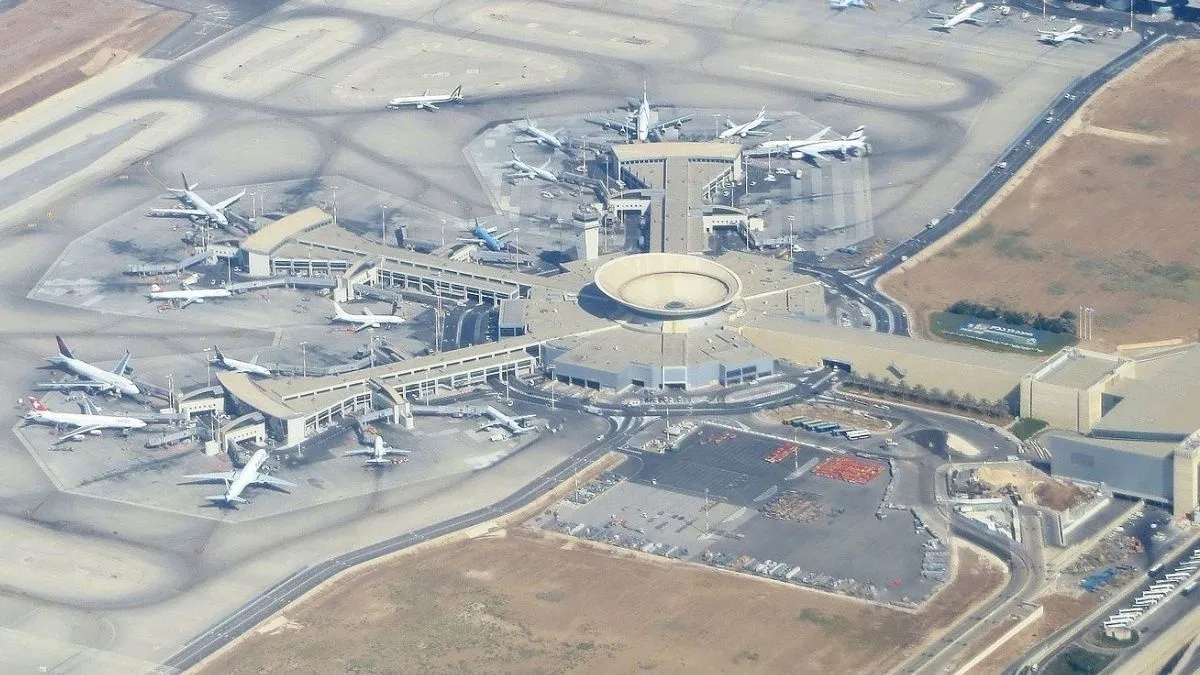
Daniel Schwartz, transport referent at the Ministry of Finance's Budgets Department, presented worrying data regarding the future of the aviation industry and the impact of disruptions on the Israeli consumer's pocket: "Ben Gurion Airport will reach its capacity limit in 2034, and we are already late. As long as we do not progress with the complementary airport, the meaning is a rapid rise in ticket prices and an increase of thousands of shekels in the price of every family vacation. It is impossible to publish a tender without the law; therefore, any delay in legislation directly delays the project."
Conversely, IAA Deputy Director of Operations Asaf Ben Michael, responsible for air traffic management in Israel, sharply criticized the proposed model: "An airport is built from the sky to the ground, not vice versa. The entity that will manage air traffic at any airport established will be the IAA—a situation where we manage traffic for airports that compete with us. These professional gaps are not regulated in the law, and I do not see who would buy tender documents when fundamental issues remain unregulated."
Adv. Pesach Brand, representing the IAA, added that the Ministry of Finance did not hold sufficient professional meetings with them to resolve these issues before coming to the committee.
Joining the IAA's position, Histadrut representative Uri Matuki expressed fundamental opposition to transferring strategic infrastructure to private hands, especially in light of lessons from recent security crises: "It is a national-level mistake to rush and transfer vital infrastructure to private hands. Israel is an 'island state' dependent on its aviation infrastructure, and we have seen that in every round of fighting, foreign airlines disappear. The IAA works excellently, and there is no reason to transfer management to an entity driven by private profit interests, while potentially harming employee conditions."
Additionally, the discussion raised the need to protect light aviation infrastructure and pilot training in Israel. Uri Aviv, Chairman of the General Aviation Association, noted that the Herzliya airport is expected to close in February 2027 and demanded that the law include clear protection mechanisms for light aviation "so that airports are not closed in the future in favor of real estate projects."
At the conclusion of the discussion, MK Danino stated that the committee would continue its sessions on the bill's clauses to formulate the necessary balances between national development needs and the maintenance of safety, professional operation, and labor rights in the industry.