 Found it useful? Share
 Share on Facebook
 Share on X
 Share on LinkedIn
 Share via Email
 Share on WhatsApp
 Print Article
The Israel Population and Immigration Authority, in collaboration with the Ministry of Labor, has halted a pilot program designed to expedite driver's license procedures for foreign workers and has canceled existing quotas for recruiting foreign truck drivers. This development came to light today during a session of the Knesset Committee on Foreign Workers. The move has drawn sharp criticism from the Federation of Israeli Chambers of Commerce, which warns of an intensifying logistics bottleneck damaging the national supply chain.
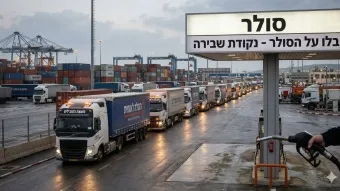
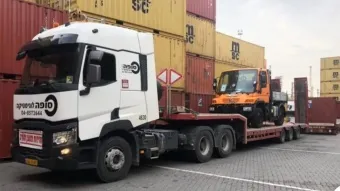
The chronic shortage of heavy vehicle drivers in Israel has long been considered one of the primary barriers in the logistics, distribution, and land freight sectors. The Federation of Israeli Chambers of Commerce has been engaged in a prolonged struggle with the government's committee of directors-general, demanding dedicated quotas for bringing foreign drivers into the trade and services sectors, similar to the limited model previously implemented in the industrial sector. The suspended pilot was intended to simplify the foreign license conversion process, which is currently viewed as a lengthy, cumbersome, and economically unfeasible procedure for companies.
During the parliamentary discussion, it emerged that the Population Authority chose, on its own initiative, not to expand the operational model to additional sectors but rather to completely abolish existing arrangements. Business sector representatives described the decision as baffling and one that directly harms the functional continuity of retail and logistics companies operating independent distribution networks. These companies are now forced to contend with surging operational costs and price increases resulting from the lack of available manpower at the loading docks.
Industry leaders in transport and trade emphasize that as long as the government lacks immediate solutions for recruiting and training Israeli drivers, halting foreign recruitment mechanisms constitutes a severe blow to business competitiveness and the general consumer public. Companies in the sector are demanding that the sovereign authority create a rapid, data-driven response that allows for the inclusion of the truck driver profession in the official foreign worker regulations to prevent the stalling of national logistics and cargo chain activity.
Elisha Yifrach, Director of Government Relations at the Federation of Israeli Chambers of Commerce, stated: "There is a severe shortage of thousands of truck drivers in the State of Israel, and the fastest solution right now is recruiting foreign workers. In practice, the existing license conversion requirements nullify this possibility, and the state's unilateral conduct harms the economy. Retail companies with distribution networks are being hurt daily, and this is a bottleneck that stalls all activity. We don't need foreign drivers; we need drivers—if the government has Israeli drivers, we would be happy to receive them, but as long as there are none, give us a solution."