 Found it useful? Share
 Share on Facebook
 Share on X
 Share on LinkedIn
 Share via Email
 Share on WhatsApp
 Print Article
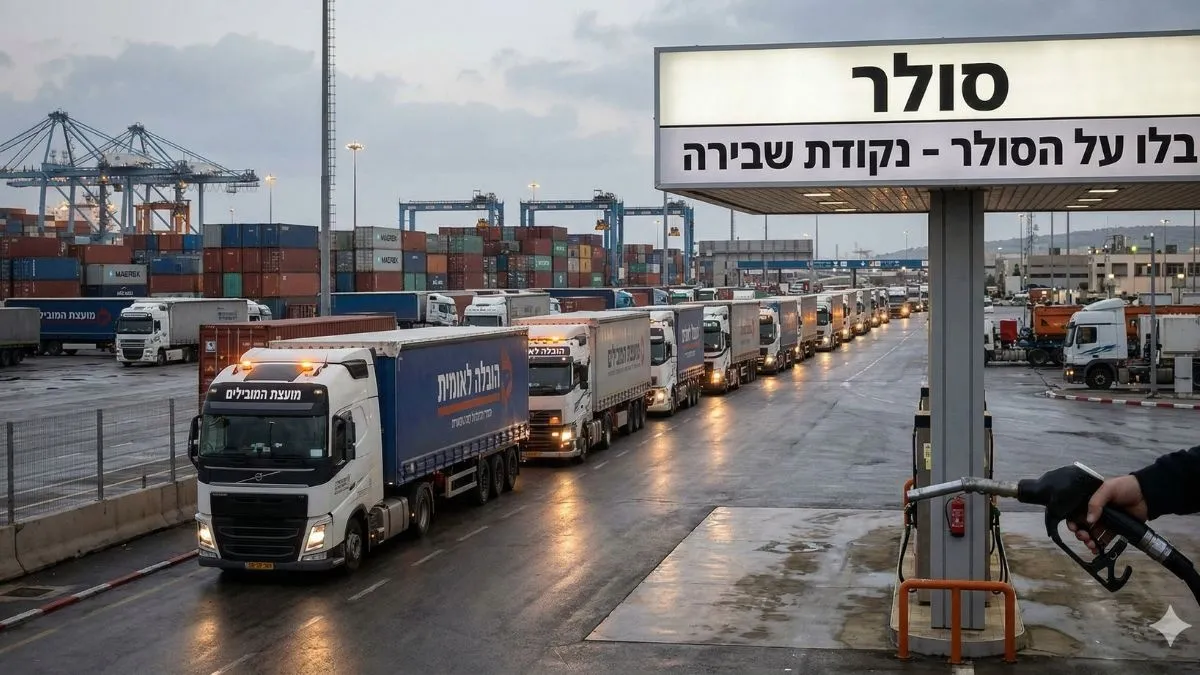
The Israeli Road Transport Board, the representative body of the transport industry in Israel, together with the Private Bus Companies Association, have issued an urgent appeal to the Israeli Minister of Finance requesting immediate government intervention to reduce the excise tax on diesel. The appeal comes against the backdrop of a dramatic expected surge in fuel prices on April 1st, which, according to the Board's estimates, will amount to an increase of approximately 1.90 NIS per liter of diesel—a move that could lead to massive losses and the collapse of many freight forwarding and shuttle companies.
Gabi Ben-Harush, Chairman of the Israeli Road Transport Board, clarified in his letter that the transport sector, which constitutes the backbone of the Israeli economy, is at a "breaking point" after years of eroding profitability and a severe shortage of drivers. According to him, diesel is the central expenditure component in the industry, and any increase in its price translates immediately into a broad price hike for consumer goods, food, and services, thereby directly harming the consumer's pocket and Israel's export competitiveness.
Dudi Gil, CEO of the Private Bus Companies Association, which represents about 500 companies operating shuttle systems for students, soldiers, and essential workers, also joined the demand. Gil emphasized that increasing the tax burden during wartime threatens the functional continuity of the home front, which is defined as a supreme security need. The organizations are calling on the government to reduce the direct and indirect tax burden on diesel to prevent a wave of mass layoffs and the shutdown of critical systems.
The Israeli Road Transport Board emphasizes that reducing the excise tax is not a "sectoral benefit," but a necessary national economic step to prevent further inflation and maintain the stability of the supply chain. The organizations demand that the Ministry of Finance act without delay, even before the new prices take effect, to provide a preemptive remedy and prevent the collapse of the State of Israel's logistics infrastructure.