

 Found it useful? Share
 Share on Facebook
 Share on X
 Share on LinkedIn
 Share via Email
 Share on WhatsApp
 Print Article
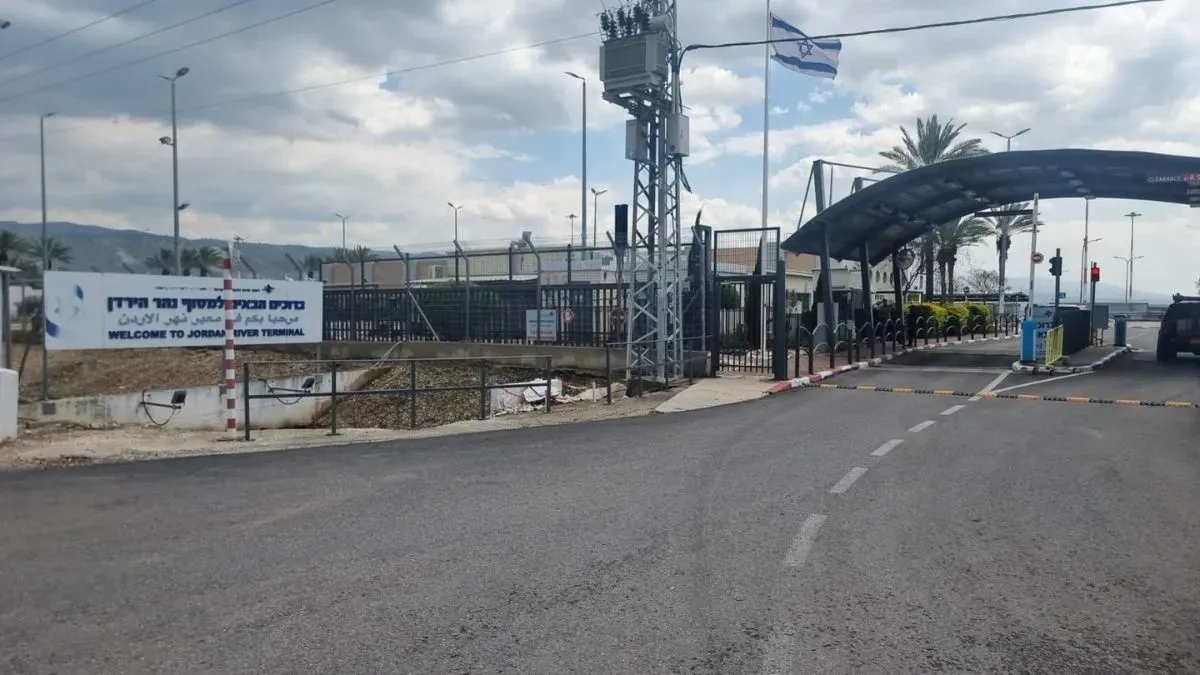
Amir Shani, Chairman of the Federation of Israeli Chambers of Commerce (Customs Brokers and International Freight Forwarders), sent an urgent letter today (Thursday, August 6) to the Israeli Minister of Transport, Miri Regev, following growing reports and concerns that customs corporation employees at the Jordan River Border Crossing intend to take organizational measures, disrupt work, and even declare a strike due to operational difficulties at the site.
In his appeal, Shani clarifies that despite the operational difficulties and significant frustration on the ground, drastic measures must not be taken: "An international border crossing is not like a manufacturing plant or a regular service sector; it is a critical public service that cannot be held hostage in labor disputes."
He emphasized that the organization views the maintenance of trade and logistics continuity as a supreme value, and that the difficulties at the crossing require professional dialogue between the terminal management and the customs corporations, rather than measures that would paralyze activity.
Demand for Immediate Intervention by the Ministry of Transport
In his letter, Shani notes the strategic importance of the Jordan River Terminal as a vital artery for the Israeli economy, both in terms of the commercial transfer of goods, food, and raw materials, and in political, security, and tourism aspects. "Any harm to the functional continuity of the terminal, even for a short period, causes heavy damage to the Israeli economy, a fatal blow to the supply chain, and severe damage to the country's international credibility," he wrote.
Therefore, the Chairman of the Federation calls on the Minister of Transport to get involved as soon as possible to improve and streamline the operational situation at the terminal and provide a fundamental solution to the severe problems, while ensuring the proper and continuous operation of the crossing without strikes.