

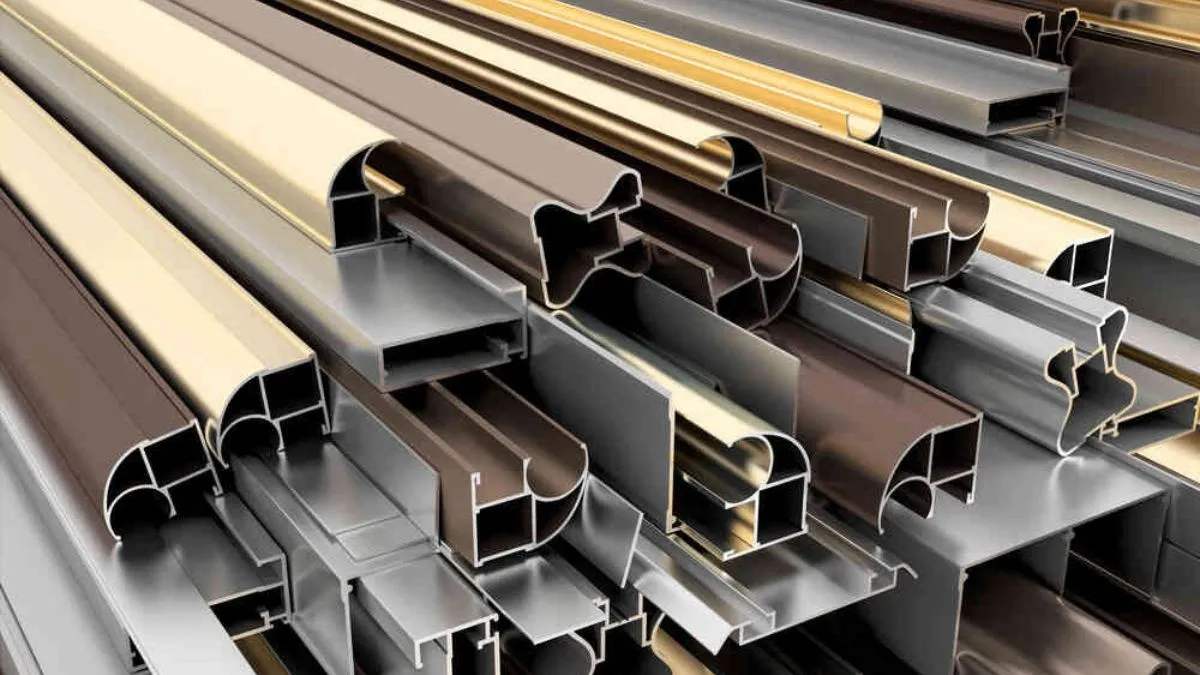
The Finance Minister has informed the Economy Minister of his opposition to imposing a floating tariff on the import of aluminum from China. The decision was made after examining macroeconomic implications and understanding that the tariff would severely impact the construction industry, delay the delivery of thousands of apartments, and increase the cost of living.
The Trade Tariffs Commissioner in the Ministry of Economy and the advisory committee recommended imposing an unprecedented tariff of 34% to 105% on the import of aluminum from China for 5 years, claiming it harms the local industry. The recommendation was based on data from 2023 - a year of war and high interest rates. The decline in factory profits resulted from the economic situation and the freeze in construction, not necessarily from the Chinese price.
The Finance Minister reveals in his letter a dramatic fact: blocking imports from China is not just an economic issue, but will lead to a physical shortage of raw materials. This is because the local industry mainly specializes in private and luxury construction and is not prepared to supply standard profiles for mass construction (towers) in the required volumes.
The dry numbers for 2025: The expected demand in the market: about 99,000 tons of aluminum. The maximum local production capacity: only about 51,000 tons. Imports from other countries (excluding China): about 25,000 tons. The result: a shortage ('gap') of about 23,000 tons per year. The implication: adopting the position of the Ministry of Economy would have led to the stopping of construction sites, delays in handing over keys to buyers, and the development of a 'black market'.
A move that will contribute to the increase in the cost of living and housing (about 600 million shekels per year) according to Treasury calculations, imposing the tariff means a direct damage of about 600 million shekels per year to the economy. Aluminum constitutes about 5.8% of the residential construction expenditure index. Any increase in it rolls directly into the pocket of apartment buyers.
The Treasury Department stated that 'The Israeli aluminum market is concentrated (oligopoly). Import is the only resonance factor on prices. Also, changing customs now creates dangerous regulatory uncertainty towards the 'What's Good for Europe' reform in 2027. The market is in the midst of transitioning to an international standard, and imposing new trade restrictions now disrupts the importers' preparations and contradicts the government's policy of removing barriers and opening the market.'
It was also reported that 'The minister's decision adopts the position of the senior professional ranks and is legally anchored: The legal authority: The decision is based on a court ruling ('the cannabis case') and the opinion of the Attorney General, which allow the Finance Minister to consider broad considerations (housing, cost of living) and not to be a 'rubber stamp' of the commissioner. The Competition Authority: Determined that there is a serious concern of harm to competition and that local manufacturers are unable to meet the demand.'
The Chief Economist: Pointed out that the data on which the commissioner was based were partial and that the 'damage' to the industry resulted from the war and a shortage of workers.
During the examination, it was found that the Chinese government recently canceled a 13% subsidy on aluminum exports. The implication: The price from China is already rising. Imposing an additional tariff would have been a 'double punishment' and unnecessary for the Israeli consumer.
Finance Minister, Bezalel Smotrich: 'My role is to see the entire economy. I will not lend a hand to a move that will enrich a small number of factories at the expense of the pocket of every citizen in Israel, will exacerbate the housing crisis and will ignite the cost of living.'
Finance Minister Blocks Massive Tariff on Aluminum
Israel's Finance Minister opposes a proposed tariff on Chinese aluminum imports, citing macroeconomic implications and potential harm to the construction industry.
09:58 ,06.01.2026
Finance Minister Blocks Massive Tariff on Aluminum
-
 Found it useful? Share
-
 Share on Facebook
-
 Share on X
-
 Share on LinkedIn
-
 Share via Email
-
 Share on WhatsApp
-
 Print Article
Found it useful? Share
Related
 22.10.2025
Tax Authority Reports 10.5% Drop in Vehicle Imports in September
 07.08.2025
Unprecedented Car Imports in 2024, Despite War Year
 03.08.2025
US Slaps 15% Tariff on Israeli Goods
 26.05.2025
Economic Committee Greenlights Cancellation of Oven Regulation
 06.05.2025
Fourth Phase of Import Reform Expands to Baby Food Products
 06.05.2025
Aluminum Duty Gets Industry Support