 Found it useful? Share
 Share on Facebook
 Share on X
 Share on LinkedIn
 Share via Email
 Share on WhatsApp
 Print Article
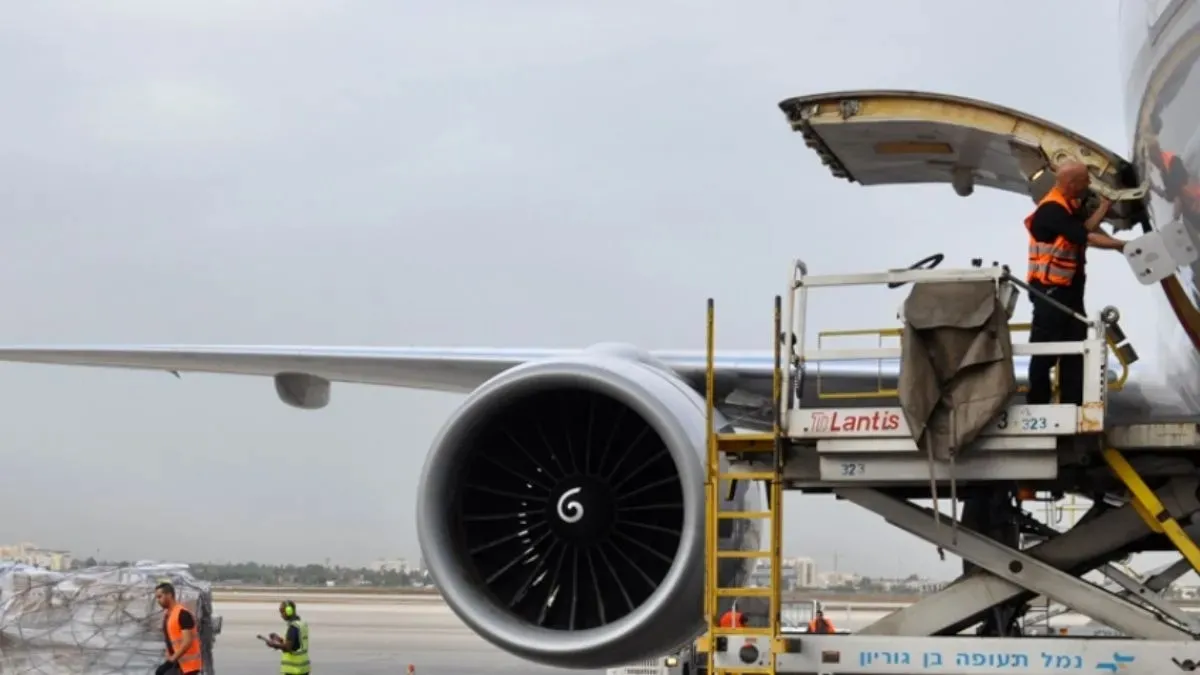
The Israel Airports Authority (IAA) report for January 2026 reveals a total increase of approximately 11.5% in cargo handling at Ben Gurion Airport, totaling 32,408 tons (compared to 29,052 tons in January of the previous year). The most prominent trend in the report is the significant growth in cargo transported via passenger aircraft, a figure that directly reflects the expansion of civil flight schedules and the restoration of capacity by foreign airlines.
The Return of "Belly Cargo": 30% Growth
Cargo transport in passenger aircraft recorded impressive growth, totaling 9,478 tons. El Al leads this sector with approximately 4,054 tons (a 43% market share), despite a slight decrease compared to last year.
Following on the list are United Airlines with 1,223 tons and Air France with 716 tons – a figure reflecting the expansion of flight schedules and capacity by foreign carriers to Israel.
Freighters: Challenges and Leadership
In the dedicated freighter segment, a 5.2% increase was recorded with 22,930 tons handled. The Israeli carrier Challenge Airlines continues to lead the market securely with 7,393 tons, representing about 32% of freighter activity, although it recorded a 13% decrease compared to January 2025.
European Air Transport showed strong performance with 5.3% growth (3,164 tons), and El Al also recorded significant dedicated freighter activity of approximately 1,944 tons.
Destination Surprise: China on the Map
An analysis of cargo destinations reveals an interesting shift in the air trade map. While Germany remains the leading destination for freighters (5,096 tons) and Belgium ranks second (4,777 tons), China recorded the fastest growth. Cargo handling with China surged by 53.2%, totaling 3,950 tons - a figure that positions it as the third most important destination at Ben Gurion Airport.
Trade Balance: Import Dominance
The data clearly shows that Israel relies on air transport primarily for imports: in dedicated freighters, imports (incoming cargo) stood at 16,560 tons, compared to exports (outgoing cargo) of only 6,370 tons.
A similar trend was recorded in passenger aircraft, where imports stood at 5,437 tons compared to exports of 4,041 tons.